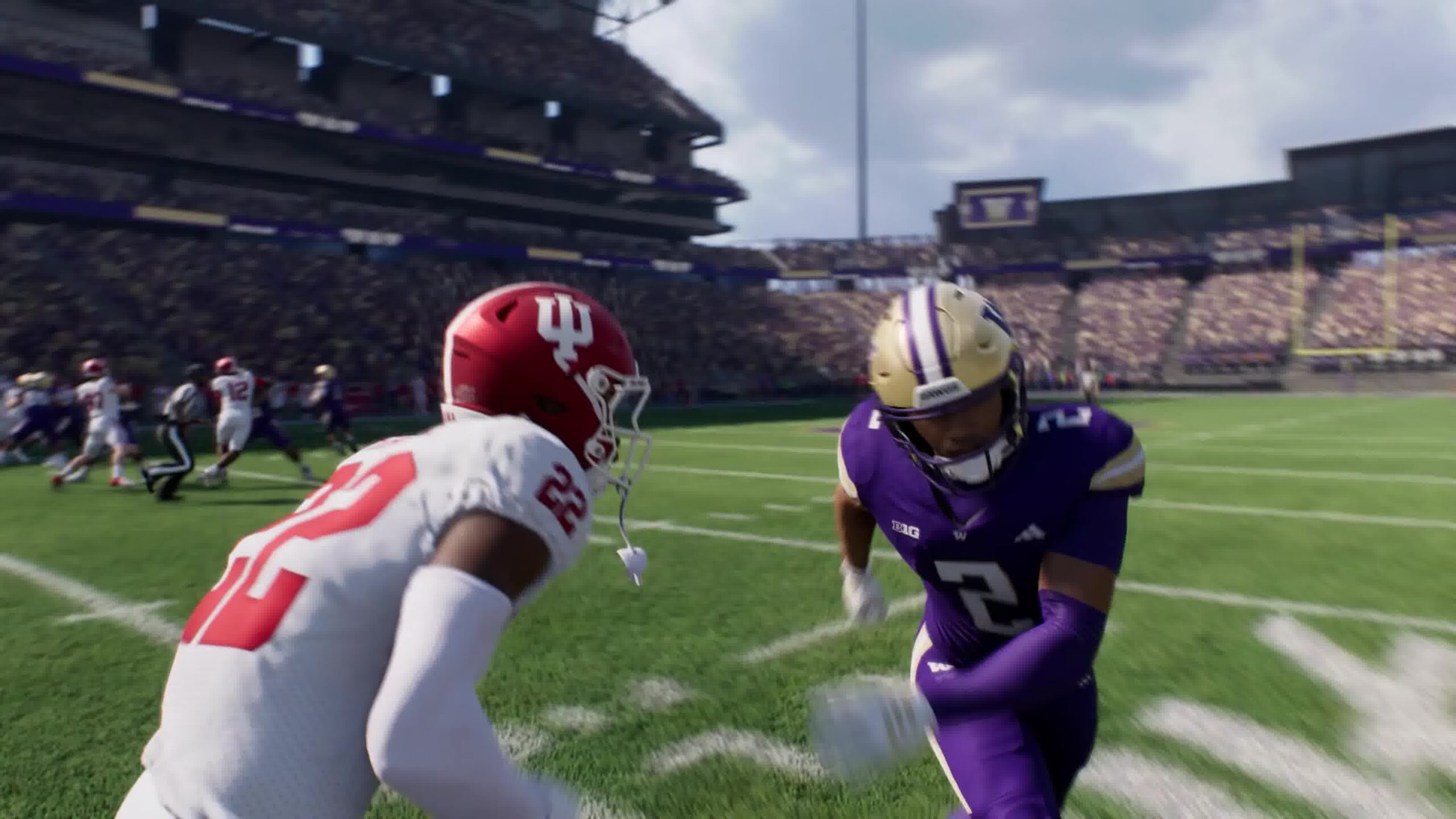
College Football 27 Ultimate Team economy is shaping up to be highly method-driven, with most players relying on a small set of consistent strategies rather than random pack luck. If you want to build a competitive squad efficiently, understanding how to generate and manage CFB 27 Coins is more important than ever.
Below is a structured breakdown of every realistic coin-making method currently available, including efficiency analysis, risk level, and expected return.
1. Overtime Head-to-Head: Fastest Free Coin Method
One of the simplest and most reliable early-game methods is the Overtime event in Head-to-Head.
The loop is straightforward:
- Play Overtime mode matches (very short games, ~5 minutes each)
- Win 2 matches
- Quit before pushing to 3 wins
Why stop at 2 wins? Because the reward structure favors efficiency:
- 2 Wins → ~7,000 coins
- 3 Wins → 79+ player pack (often low-value quicksell)
Even if the pack occasionally hits, the guaranteed coin payout from 2 wins is more consistent. In raw efficiency terms, this becomes one of the highest “coins per minute” activities in the mode.
This method is ideal for early grinding or when you want stable currency without market risk.
2. Sniping 83 OVR Players: Core Auction House Strategy
The most consistent long-term method revolves around auction house flipping, specifically targeting 83 overall players.
Step 1: Establish Market Price
Filter:
- Quality: 82–83 OVR
You’ll typically see 83 OVR cards selling around:
- ~44,000 coins (market floor)
- Safe sell range: ~42,000 coins
Step 2: Target Snipe Range
Profit threshold:
- Buy at 35,000 coins or lower
This creates a safe margin of roughly 5,000–7,000 coins per flip after tax.
Step 3: Best Filters
You have two primary approaches:
Program Filters (Most Consistent)
- Fresh Faces
- Name of the Game
- Standout
- Alumni (note: starts at 82 OVR, not 83)
These filters provide higher listing volume and more predictable snipes.
Position Filters (Higher Margin, Lower Volume)
- All Offense
- All Defense
- Sort by “Newest”
This method relies on catching fresh listings before the market reacts. It’s slower but can produce higher-value snipes if timed correctly.
3. Training Rolls: High Risk, Low Expectation
Pack rolling using training is where most players lose efficiency.
To evaluate properly, you must convert training into coin value. A common baseline:
- 81 OVR snipe cost: ~16K
- Training ratio: ~67 coins per training point
Example:
- 2,400 training roll × 67 ≈ 160,000 coin cost per roll
Now compare outputs:
- Most 86 OVR pulls: <160K value
- Only profitable outcome: LTD pull
Without hitting extremely rare cards, rolls are mathematically negative EV. Even “premium” packs like Fresh Faces or Name of the Game suffer from this imbalance.
Conclusion: Training rolls are currently high-risk gambling, not a stable coin method.
4. Sets: Currently Inefficient for Profit
At this stage of the economy, sets do not provide meaningful coin returns.
Key issues:
- Input cost exceeds output value
- Reward cards are often below market sell thresholds
- Major collection sets are incomplete or locked
Unless future updates introduce profitable set rewards, this remains a non-viable method for coin farming.
5. Recruit Bundles: High Variance Gamble Method
Recruit bundles cost approximately 25,000 coins per opening, making them a mid-tier risk investment.
What makes them interesting:
- Potential to pull high-value players
- Occasional LTD jackpot hits
- Wide variance in outcomes
Example outcome range:
- Low pull: 70–78 OVR → minimal return
- Average pack: ~10K–15K value
- High pull: 80+ OVR → possible break-even or profit
- Rare pull: LTD → massive profit spike
In practice, recruit bundles are not reliable for consistent CFB 27 Coins generation, but they remain a “lottery-style” alternative for players who enjoy variance-based gameplay.
6. Market Reality: Why Sniping Dominates
When comparing all methods:
- Overtime mode → stable low-income grind
- Sniping → consistent scalable profit
- Packs → negative or volatile EV
- Sets → currently non-profitable
This creates a very narrow optimal strategy window centered almost entirely on auction house flipping.
The best-performing players are those who:
- Track price floors daily
- Understand promo-based filters
- Rotate between program and position sniping
7. Should You Buy Coins or Grind?
Some players consider external shortcuts when progression slows down. In that context, you’ll often see services advertising options like Buy College Football 27 Coins as a way to bypass grinding entirely.
While this may appear attractive for immediate team building, it’s important to understand that the in-game economy is heavily tied to auction house behavior, and skipping progression can reduce long-term engagement with market strategies that are core to Ultimate Team.
Final Breakdown: Best Coin Strategy Tier List
S Tier (Best Overall)
- 83 OVR Sniping (program + position filters)
A Tier
- Overtime Head-to-Head grinding
B Tier
- Recruit bundles (high risk, occasional profit)
C Tier
- Training rolls (mostly negative EV)
D Tier
- Sets (currently inefficient)
Conclusion
The economy in College Football 27 Ultimate Team is currently heavily skewed toward market manipulation and sniping efficiency rather than pack-based luck. If your goal is steady progression, mastering auction house timing will outperform almost every other method.
Whether you’re grinding for upgrades or trying to scale quickly, understanding how CFB 27 Coins flow through the market is the foundation of long-term success.